
Published January 12th, 2026
Interview
by Lisa Schantl
Natasha Lvovich is a writer and scholar of multilingualism and of multilingual literature, based in New York, with Russian origins and a global vision. This summer, Tint’s editor-in-chief Lisa Schantl accompanied her on walks along the Coney Island Boardwalk and through Greenwood Cemetery in Brooklyn. Here’s what they talked about, and followed up on.
Lisa Schantl: When you founded the Journal of Literary Multilingualism (JLM), a space for academics and creatives to contemplate how multilingualism and multilingual creativity work in literature, what served as inspiration to become its editor-in-chief?
Natasha Lvovich: Oh, this did not come out of the blue. Literary Multilingualism, which I see as a broad interdisciplinary field, had been in the works for more than a decade. Literature written in L2 (a second language) or in other multilingual contexts has been exploding, and the scholarship analyzing it had to find disciplinary niches in Academia. It became fragmented. Therefore, an international interdisciplinary field, along with the community, had to be forged. I had been steadily working toward it, guest editing special journal issues (L2Journal, CMS, Studies in the Novel), lecturing internationally, organizing conference panels, and creating networks across the continents in partnership with Steven Kellman, my mentor and the “founding father” of this emerging field. After we had published the Routledge Handbook of Literary Translingualism (2021), the term stamped the field into existence, and we got noticed. An editor from Brill got interested, and I put together a proposal, which was enthusiastically accepted.
My personal engagement with Literary Translingualism dates back to my doctoral studies, when I read Elizabeth Beaujour’s seminal book Alien Tongues, and my daughter happened to take her course on Nabokov at Hunter College, which helped turn Beaujour from a scholar in the Ivory Tower to a living, breathing person. I contacted her, and she said, “I have your book [The Multilingual Self, 1995] on my desk, let’s meet!” She was the one who made it real. Via Beaujour, Nabokov, and synesthesia, I found other scholars, conferences, and Steven Kellman. That’s how I came to comparative literature, after the doctorate in Second Language Acquisition/Applied Linguistics, having made a few momentary stops at Composition and Rhetorics and American literature (my background is in French language and literature).
Lisa: In an interview with The Massachusetts Review you say, “I don’t believe in compartments, departments, and disciplines.” How do you seek to organize and distribute ideas and research on multilingualism so as to accommodate its multidimensional, interdisciplinary aspects?
Natasha: My approach to knowing is “horizontal” rather than “vertical.” This spatial analogy seems clear to me (perhaps because I am synesthetic), but, surprisingly, not everybody “gets” it. It is like being multilingual, if this term could be expanded to other aspects of self. Therefore, it interests me to explore multilinguals as versatile creative individuals, writers and artists1. Yes, this is my mantra that knowledge is not divided into departments, compartments, and disciplines, but is broad, inter-disciplinary, multi-modal, and holistic, as opposed to the “industry of knowledge,” with an artificially constructed structure and hierarchies to accommodate social, political, educational, and career aspirations. Like all faculty, I depended on academic requirements to pursue a career, but it was not easy to do so for an “elephant-zookeeper,”2 a teacher, a writer, and a scholar, who chose to incorporate into research what we might call a “romantic inquiry” (personal, heuristic, experiential, and phenomenological methods). Therefore, it only makes sense that, along with scholarship, I am encouraging creative submissions to JLM by multilingual writers and poets.
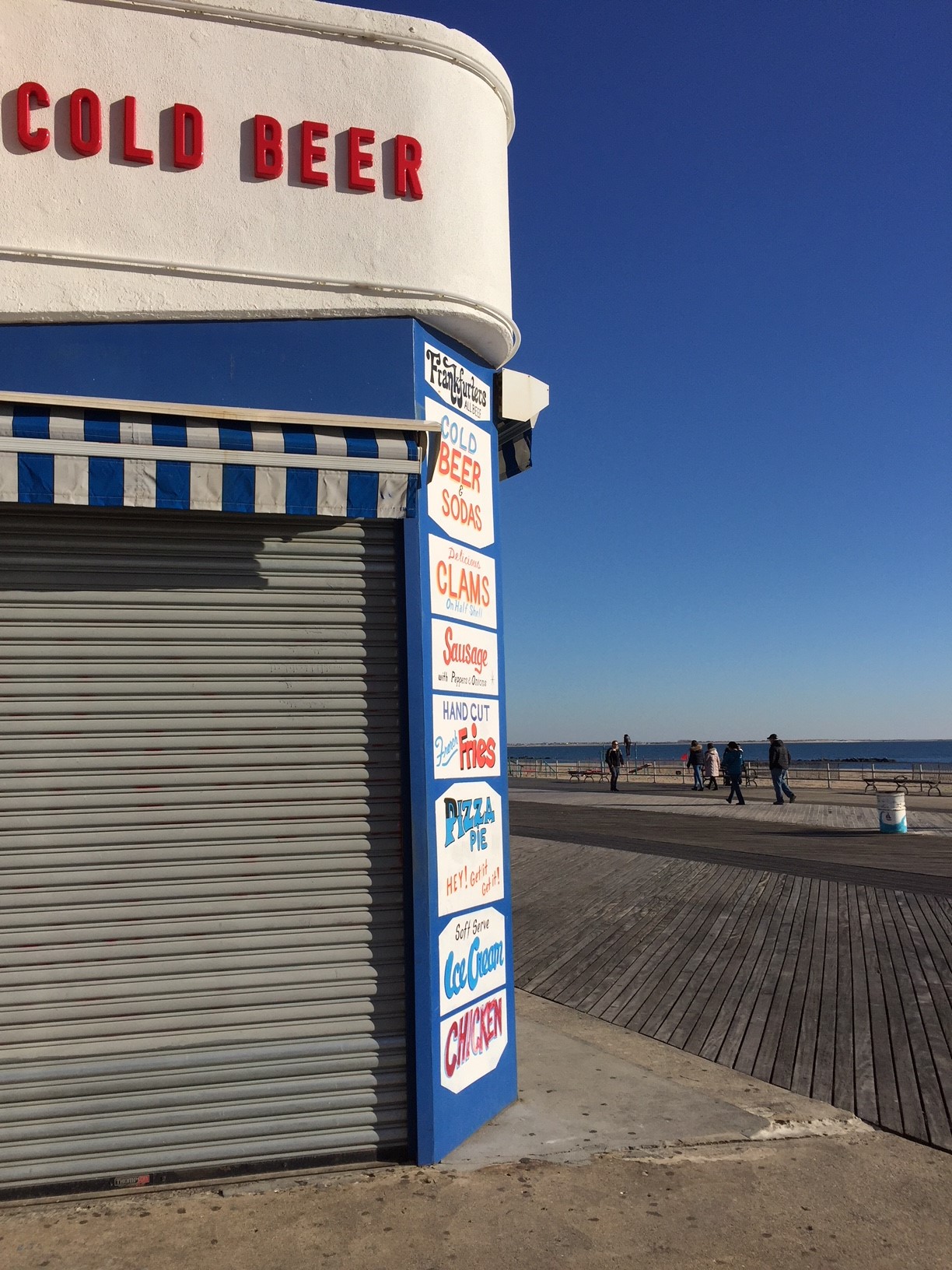
Lisa: Let’s focus on you as a writer for a bit. Your creative nonfiction pieces are filled with subtle observations, the mundane made special and peculiar. I’m thinking of the phone charging situation you describe in the days after hurricane Sandy (“Sandy Chronicles” in Epiphany, no. 13, 2013), or your piece about a stroll along the Coney Island Boardwalk. What makes these subtle gestures, places, rituals noteworthy?
Natasha: I guess this ability to observe and to be attentive to details is one of those writer manifestations (“show — do not tell”). I notice my friend’s new earrings, or Russian women swimming in their hats, or my dentist’s worn-out sneakers — and I make a mental or written note. My readers are my “sputniks”: We walk, smell, and giggle together. Through these descriptions, they sense a mood and an attitude, as I tell a story.
Lisa: You frequently draw on your Russian heritage to create contrast or irony, and to encourage a giggle from your readers. What functions does humor have for you in literature?
Natasha: I have noticed that references to Russian jokes, idioms, or anecdotes, as untranslatable as they are, often generate a smile. It is possible that the explanation is the ubiquitous Formalist device ostranneniye slova — the defamiliarization of the word — in this case, a defamiliarizing humorous function produced by a foreign word, or linguistic or cultural code-switching or mixing. For example, people always crack a smile when I translate the Russian idiom zastol’ye, which could be explained as conviviality, as “at-the-tableness.”
Lisa: You previously pointed out to me that in Russian, emotions and matters of the heart are rather voiced by means of poetry or metaphor. What do you think about English in this regard, which is much more direct?
Natasha: Western Enlightenment, professing reason, came much later to Russia. Although Catherine the Great corresponded with Voltaire, Russian philosophical traditions, enhanced by Christian Orthodoxy, largely remained metaphysical, poetic, and esoteric, although I am sure this discourse is changing, following the West, with the industrialization and monetizing of psychology. Some of my cultural prescriptions remain Russian, and I am annoyed by the direct question “How does it make you feel?” (“I am sad”).
Lisa: Thinking of your arrival in the United States: How do you remember your early days on this new continent?
Natasha: They say: Brighton Beach is not Brooklyn; Brooklyn is not New York; and New York is not America. I was not immediately ready to accept New York aesthetics, such as rusty elevated subway bridges or pidgin Russian spoken in Brooklyn. But life had its demands: I had a 4-year-old child, a musician husband who did not speak English, and the older parents. In the 1990s, a wave of Russian immigrants flooded Brooklyn and the “ESL business” flourished. A language teacher is always a language teacher. I had the nerve to start teaching English two months after we had arrived. I understood roughly 50% of TV. But the more I walked New York streets, the more I interacted with people (and found some kindred souls), the more I accepted and softened. An acquired earned connection is stronger than a native one, because it is not free. My culture shock subsided.
Lisa: Besides being an editor and a writer, you also taught English language and literature at colleges in New York City for many years. What is your mission when you think about supporting the generations to come, and how can one fulfill that also outside of a classroom?
Natasha: I have been teaching languages all my life: first, French, then English, and Russian. Here in NYC, I have taught at CUNY for more than thirty years: ESL, Freshman Composition, and literature courses. I also taught graduate courses at Brooklyn College and was planning a course on Literary Translingualism at Hunter College, when the pandemic struck. This is when the proposal to found a journal became more viable than a course at Hunter. During the pandemic, I retired from teaching after more than three decades on the “battle for literacy,” and unfortunately, this was not the battle I was winning.
I don’t miss teaching. My new career as a journal editor allows me, among other things, to interact with and nurture young people, authors and editors, and this is one of my missions. I have made a full circle in language and literature, and it brings me self-confidence in my new role as an editor. My publishing vision is based on community building and on forging collaborations and partnerships. For example, the ongoing collaboration with the international group LangueFlow and our multiple collaborative projects, such as online conferences and events (e. g., the roundtable series “Multilingual Literature in Conflict Zones”) or the connection with Tint Journal and its multilingual poets and writers. Finally, this is the right moment to promote multilingualism and multiculturalism, knowledge, peace, and human connection in today’s divisive world, contracting from violence, isolationism, populism and nationalism.
Lisa: Speaking of multilingualism: Both our publications appear in English — and this conversation takes place in English as well... How can we harvest the fruits of a global language for multilingual endeavors?
Natasha: Despite its colonial past and its global discriminatory present, English is our lingua franca, similar to Esperanto — before we invent the “universal translator,” a chip inserted at birth, as in Star Trek. JLM requires authors to quote in original languages (with English translation), and we are making a special effort to cover scholarship and book reviews written in other languages. On a personal note, English does not carry for me a heavy emotional tint, as it does for some multilingual writers, like for J. M. Coetzee, but Russian and French do.
1 See the special issue of Critical Multilingual Studies Natasha Lvovich co-guest edited with Steven Kellman: Multilingual Creativity and the Arts, Vol. 7, Issue 2, 2019: https://journals.librarypublishing.arizona.edu/cms/issue/549/info/
2 When Roman Jakobson refused to hire Vladimir Nabokov at Harvard Slavic Department, he was said to ask: “Gentlemen, even if one allows that he is an important writer, are we next to invite an elephant to be Professor of Zoology?” See https://www.thecrimson.com/article/2012/10/4/nobokov-jakobson-harvard-academy
3 Sputnik was the first satellite launched into low Earth orbit in 1957 by the Soviet Union. “Sputnik” means “companion” in Russian.
Nationality: Austrian
First Language(s): German
Second Language(s):
English,
French,
Spanish
Supported by:


Comments on "A Brief and Personal History of Literary Translingualism — An Interview with Natasha Lvovich"
Please log in to submit a comment.
Login