
Published August 17th, 2026
Review
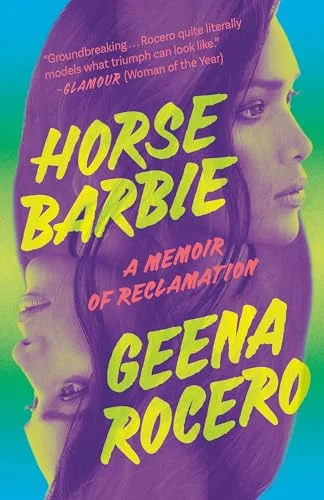
Chapter's Still Unwritten — A Review of “Horse Barbie: A Memoir of Reclamation” by Geena Rocero
by Sam Dapanas
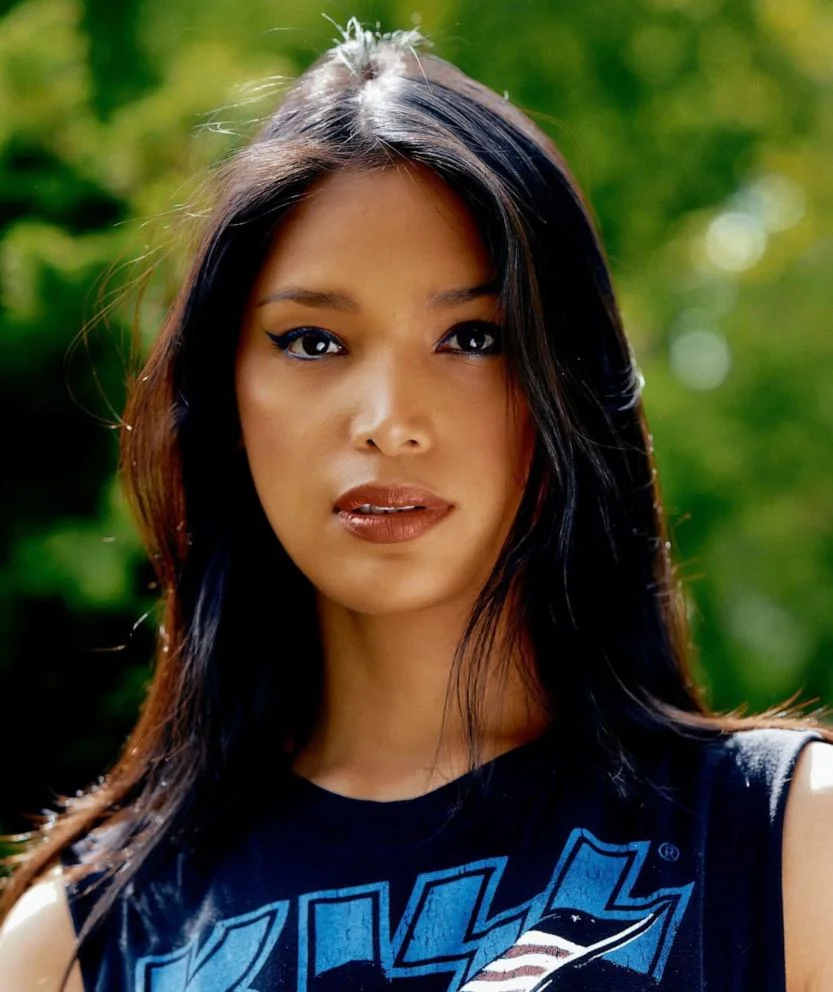
Geena Rocero is a Filipino-born American supermodel, writer, filmmaker, television host, and transgender rights advocate based in New York. Born and raised in Manila, Philippines, she founded Gender Proud, an award-winning media production company dedicated to elevating transgender stories worldwide. She has written and directed the short film Dolls (2025), a cult thriller with an all-trans cast. Her credits include the four-time Emmy-nominated PBS docuseries Caretakers, the GLAAD Media Award-winning Beautiful As I Want to Be, and acclaimed works such as Willing and Able, No League of Their Own, and Made To Model. She co-hosts the Webby Award-honouree TV show ASPIREist on HLN/CNN. Horse Barbie: A Memoir of Reclamation (The Dial Press, 2024) is her first book.
***
“I learned how to be trans in the Catholic Church” (p. 3), writes Geena Rocero on her childhood in Horse Barbie: A Memoir of Reclamation. She recalls standing in the children’s choir at Our Lady of Guadalupe Parish Church, interpreting the “Hosanna” chorus with hand gestures and a feminine flourish. In the Philippines, young Geena, nicknamed “Bojojoy,” was hyper-visible as bakla (femme/trans, roughly translated) but legally invisible. She was the sun-kissed kid finding her way through Catholic guilt and street bullying.
Rocero chronicles what it’s like to be trans and queer in the Philippines:
Despite the ubiquity of government-organized trans pageants in the Philippines, trans people themselves are not politically recognized. We are culturally visible but legally erased. To this day, trans Filipinas have M gender markers on their documents and cannot change their names in court. We don't have robust antidiscrimination protections. No amount of pageant glory can make up for the fact that our government still doesn't see and treat trans people as full citizens able to participate in society as we truly are. (p. 68)
Horse Barbie’s prologue enthralls the reader from the start with the tension of her getting cast in a John Legend music video at 21 years old: “I wanted to be successful without getting outed [as trans], which felt like driving right up to the edge of a cliff before slamming on the brakes” (p. xii). The story races forward through high-stakes turning points: winning Miss Gay Universe in the Philippines at age 17, emigrating to the U.S. on a green card, undergoing gender-affirming surgery in Thailand, going “stealth” while modelling in New York, coming out via her TED Talk, and embracing public advocacy.
In San Francisco, Rocero grasps that the central conflict is the gulf between the legal recognition she craves (getting that ‘F’ marker on her ID) and the social invisibility she’s forced into while working the make-up counter. In New York, that tension turns into a double life straight out of a spy thriller: casting calls, the slow psychological erosion of modelling while hiding who she is, and the constant anxiety of staying stealth. Trips to Bangkok and Bali let her “decolonise” her mindset and trace her transness through a lineage of shamans in pre-colonial Southeast Asia.
Rocero is an exceptionally self-aware narrator, especially in hindsight. Her writing nails the split consciousness of living stealth: the nonstop internal monologue and the way she gives two different answers to the simplest questions. She’s ambitious to a fault. Her “Horse Barbie” persona (with her long neck and prominent profile) is a coping strategy, a fantastical alter ego that lets her command stages while cocooning the wounded Bojojoy inside. Her flaw is a kind of messianic hubris (“I thought I could be the one to change things” p. 143), which also makes this memoir so absorbing.
Her own mother flies with her to Thailand for surgery and helps keep up the family cover story. But Rocero doesn’t sanitise her to sainthood. Instead, she shows her mother’s anxieties, her Catholic baggage, and her unconditional love. A trans maternal figure also appears in the form of Tigerlily, embodying a special kind of trans kinship.
Rocero uses code-switching as a narrative gambit, incorporating Tagalog and queer genderlects (“Julanis Morrissette” as swardspeak for “ulan” or rain), which provide an inside layer for readers who get it and a textured soundscape for those who don’t. The humour comes straight from the streets and dressing rooms. Writing in English as her second language makes Rocero’s prose direct and rhythmically alive. It’s plainspoken yet poetic. Punchy sentences trade off with lush, sensory descriptions that vividly bring the cities where she’s lived to life. Tagalog phrases weave in naturally, never over-egged. The use of multiple languages here mirrors her life: English is for social survival, Tagalog is for emotional truth. Sporadic awkward phrasings feel organic, like someone unpacking trauma in real time, not like refined literary artifice. This is at its strongest when describing smells (the seafood market, the Arabian jasmine, the balikbayan boxes) and sensations (the itch of bleaching powder, the tingle of new skin).
As Rocero meditates:
I smelled the United States before I ever set foot in it. Our family in America regularly sent us balikbayan boxes... My siblings and I would tear it open and sniff at the foreign air. “It smells… imported,” we’d say. It smelled like America. It smelled like possibility. (p. 77)
The memoir’s core frictions are contoured. In the Philippines, she was a national celebrity (crowned Miss Gay Universe in 2000) but still had an ‘M’ marker on her ID. Crowned and catcalled, she was hyper-visible as a spectacle but legally erased. In the U.S., she was legally recognised (an ‘F’ on her passport) but culturally sidelined and whittled down to a silhouette in the music video of John Legend’s “Number One” (2005).
I love this memoir for arguing a nuanced take that both realities are forms of unspoken violence. Trans women deserve to be seen and recognised at the same time.
Rocero moves from whitening creams (colourism as colonial mentality) to tanning beds to embrace her “mocha” skin. She transforms her Catholic guilt, a Spanish colonial legacy, into babaylan spirituality to reclaim a pre-colonial gender fluidity. Early shame gives way to pride. Ambition softens into self-compassion. She reflects on how transness intersects with race, class, and migration. There are DIY hormone pills back in the Philippines versus surgical access in Thailand. There are ‘wa buking’ (straight-passing) superpowers in San Francisco versus the terror of being clocked in New York. But she shines in the pockets of peace, too: clutching her boob for reassurance, crying over her father’s acceptance, dancing freely at Pride. She’s frank about her contradictions, using stealth for opportunity while critiquing it, without beating herself up.
To me, Horse Barbie is a masterclass in describing the internal strain of being closeted. It’s not just about telling a lie. It’s about the exhausting translation of a whole life. The spy metaphor used here is perfect: always scanning, always adjusting her voice, always revising her childhood story.
Rocero writes, “I was hiding, lying, and performing, all in plain sight. It was stressful, but at times it could also be fun. When I forgot what was on the line—and I often had to for my own sanity—I could enjoy the spycraft. This anonymous room, tucked away on the Upper West Side, would be a perfect base of operations” (p. 138).
I find Rocero’s inwardness as a memoirist to be shaped by ambition as a trauma response. She models, wins pageants, and hustles for magazine covers not just for money but for proof: proof she’s beautiful, proof she belongs, proof she’s real. Her reflections as a woman of colour mount critiques against unspoken hierarchy even among Asians. As a “Jungle Asian,” or a brown-skinned Southeast Asian, she was often the token in a sea of East Asian or white models. Embracing the Horse Barbie persona is a pushback against these Eurocentric beauty standards.
A minor critique: the advocacy work, the White House visits, and UN speeches feel more like a highlight reel on social media. This is a common issue I have with celebrity memoirs: the slope is more riveting than the summit. It’s also very much the “good” trans story, and Rocero is upfront about her luck (her mother’s U.S. green card, her own wits). Still, the narrative arc of Horse Barbie slots neatly into the American Dream archetype (immigrant works hard, becomes a star), even as she candidly discusses the dangers of DIY hormones and the murders of other trans women.
At its core, Horse Barbie is about claiming wholeness as a beauty queen, a once-closeted model, a daughter, an advocate, and a bouncy kid who once sashayed her way through life. It’s not a smooth-sailing heroine’s journey but a spiral, swirling back to childhood wounds while moving forward into activism and joy. As Rocero puts it, “I am chapters that are still unwritten, and so are you” (p. 290); Horse Barbie is truly an accumulation of all the selves she has ever been.
Comments on "Chapter's Still Unwritten — A Review of “Horse Barbie: A Memoir of Reclamation” by Geena Rocero"
Please log in to submit a comment.
Login