
Published March 16th, 2026
Review
We Are Not Just Ourselves — A Review of “Freshwater” by Akwaeke Emezi
by Jade Hui
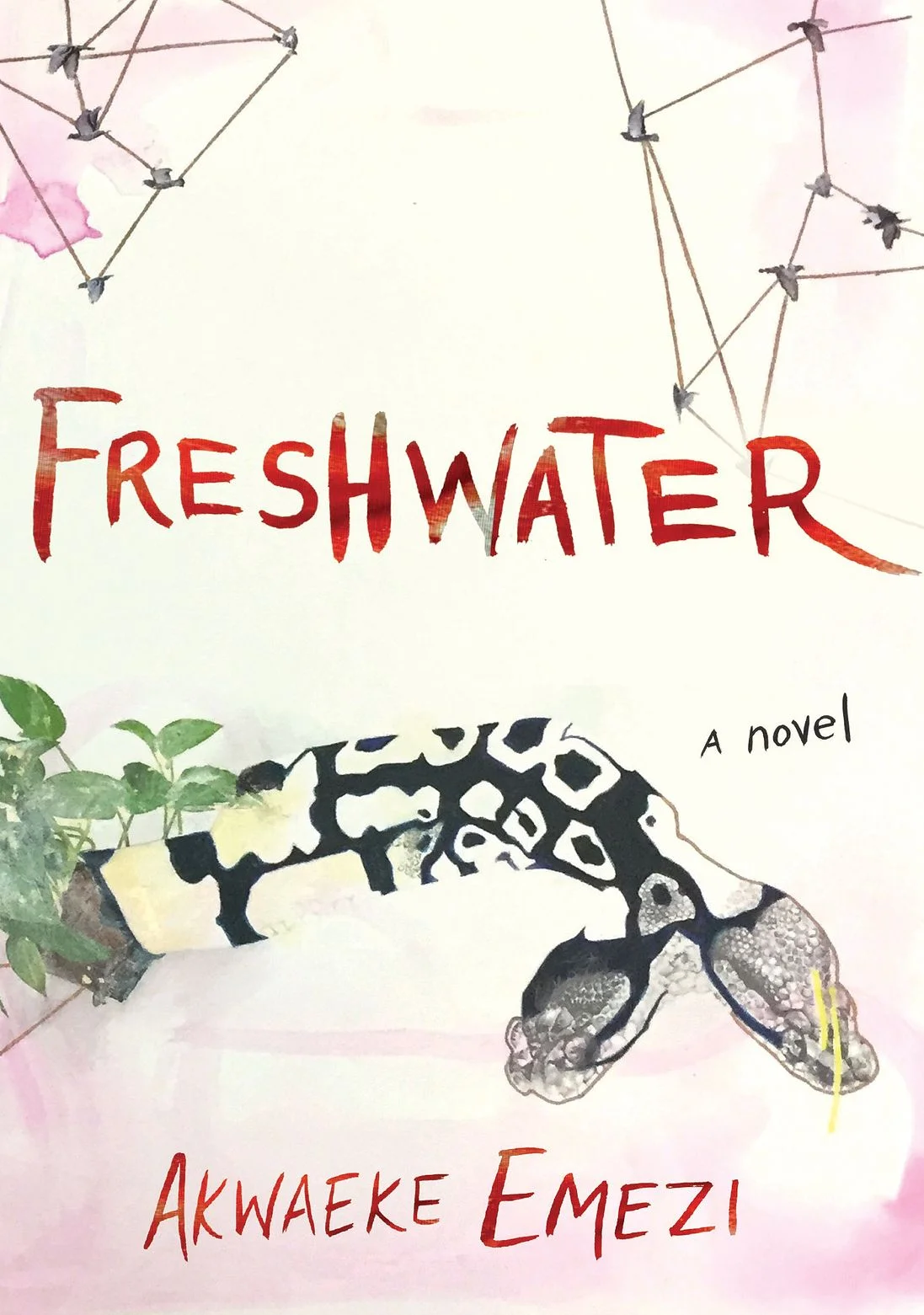
Akwaeke Emezi’s debut novel, Freshwater (Grove Press, 2018), is a haunting exploration of identity, spirituality, and mental health through the lens of Igbo cosmology. The story centers on “The Ada,” a young Nigerian coming to terms with Non-Binary identity, being born with multiple selves — ogbanje, or spirit children, who inhabit their mind and body. As The Ada grows up in Nigeria and later moves to America for college, they grapple with trauma, relationships, and self discovery. The narrative shifts between perspectives: the collective “We/we” of the ogbanje, The Ada’s human experiences, and individual spirits like the fierce Asụghara and the nurturing Saint Vincent. Drawing from Emezi’s own experiences, the book blends autobiography with myth, portraying The Ada’s journey as a battle between their fleshly vessel and the divine entities within them.
What I love most about Emezi’s writing is how it challenges us to question our sense of self. By using “We/we” for the spirits and referring to The Ada as “the flesh container,” Emezi highlights the divide between their human mother and their spiritual ties to Ala, the Igbo earth goddess. This forces readers to reflect on their own origins. I especially connect with the idea of being “ejaculated into an unexpected limbo — too-in-between, too god, too human, too halfway spirit bastard” (p. 34). As a fellow Non-Binary person, it resonates deeply, offering comfort in that liminal space. Emezi captures the Non-Binary struggle with menstruation as a harsh reminder of bodily constraints, stripping away the freedom of existing between genders. The Ada’s gender transition surgery is beautifully framed as a resurrection, a reclaiming of agency that’s both moving and affirming.
Emezi immerses us in the ogbanje’s distant viewpoint, tackling big philosophical questions like the Problem of Evil — if a benevolent god exists, why allow suffering? Here, Emezi empathizes with Yshwa (a reimagined Jesus), who rejects reincarnation after the trauma of physical embodiment, having endured that “abomination” (p. 36) once. This prompts us to consider birth itself as traumatic. Another layer suggests that human pain stems from miscommunication between gods and mortals; Yshwa tries to reassure The Ada they haven’t erred, but their brokenness drowns it out. This interplay underscores the need for polytheistic, pluralistic views of divinity, where gods and humans are entangled in messy, empathetic ways.
The book’s take on madness is equally compelling. Early on, the ogbanje reject having a singular consciousness as madness, tying it to themes of freedom and the choice to leave — for example through suicide. Emezi doesn’t shy from addressing self-harm, portraying The Ada’s cuts as sacrifices to quiet the spirits and prevent total breakdown. The line blurs with their tattoo obsession; both are ways to mark the body amid inner chaos. Madness is pinned on the parasitic spirits: The Ada remains sane, but contaminated by them, roaring in their mind’s “marble room” (p. 39). Yet, they find clarity in it, declaring they’re not opposed to madness when it brings insight. Love, too, becomes a “better madness,” addictive like a drug, elevating another person to godhood. This reframing makes readers ponder their own impulses, feeling less alone in their internal multiplicity.
Emezi embraces other forms of deviance with empathy. For asexual readers, there’s resonance in how physical desire feels alien to The Ada — the body’s compulsions not meant for them. Intoxication arises from loneliness, a desperate merge with others. Migratory trauma haunts the ogbanje, raging at displacement in a new country, though The Ada later finds solace in knowing love transcends space. Still, they carry melancholy in the “spaces between freedom” (p. 168).
From Asụghara’s view, what draws a god to humanity is the thrill of individuality: “I was a me! I had a self!” (p. 54) It reminds us not to take life for granted, celebrating the wonder of feeling separate and special amid human pleasures.

Emezi masterfully reframes everyday struggles with spiritual depth. Forgetting becomes protective, especially around sexual trauma. Cutting hair marks Asụghara’s arrival, turning it into a ritual. Dissociation is vivid — The Ada “gone” as Asụghara pilots their body, practicing smiles on their face. Readers with depression might relate, though labelling it clinically feels reductive; Emezi invites broader cultural interpretations.
This is why Western psychiatry falls short for The Ada — its rigid symptoms ignore cultural multiplicities. Therapy fails, but a priest like Lẹshi succeeds by acknowledging their many selves and calling them by all their names — reminding me of a rather poignant quote from a queer friend, “I am all the names I carry.” As Emezi notes, to mend something broken, study its shattering pattern first.
Ultimately, emerging from shadow hurts — to awaken, to feel. But embracing being an ogbanje, a child of Ala, brings peace through cultural narratives. Ala’s advice to find one’s tail urges us to honour our animalistic, invisible parts, grounding us in roots that psychiatry can’t touch.
Freshwater is a mirror for those navigating fractured selves. As I write this review I have debated within myself what pronouns to use for The Ada — “she,” where she began? “They,” where they ended up? How could I acknowledge and honour the entire journey described within the book? Or does being an ogbanje completely exceed Western frameworks such as gendered pronouns? Anyways — Emezi’s raw, authentic, imaginative, and poetic voice makes this book unforgettable, urging us to embrace our inner gods and shadows alike.
Comments on "We Are Not Just Ourselves — A Review of “Freshwater” by Akwaeke Emezi"
Please log in to submit a comment.
Login