
Published June 8th, 2026
Review
Korean Women and the Pursuit of Education and Freedom — A Review of “All Things Under the Moon” by Ann Y. K. Choi
by Joyce Bou Charaa
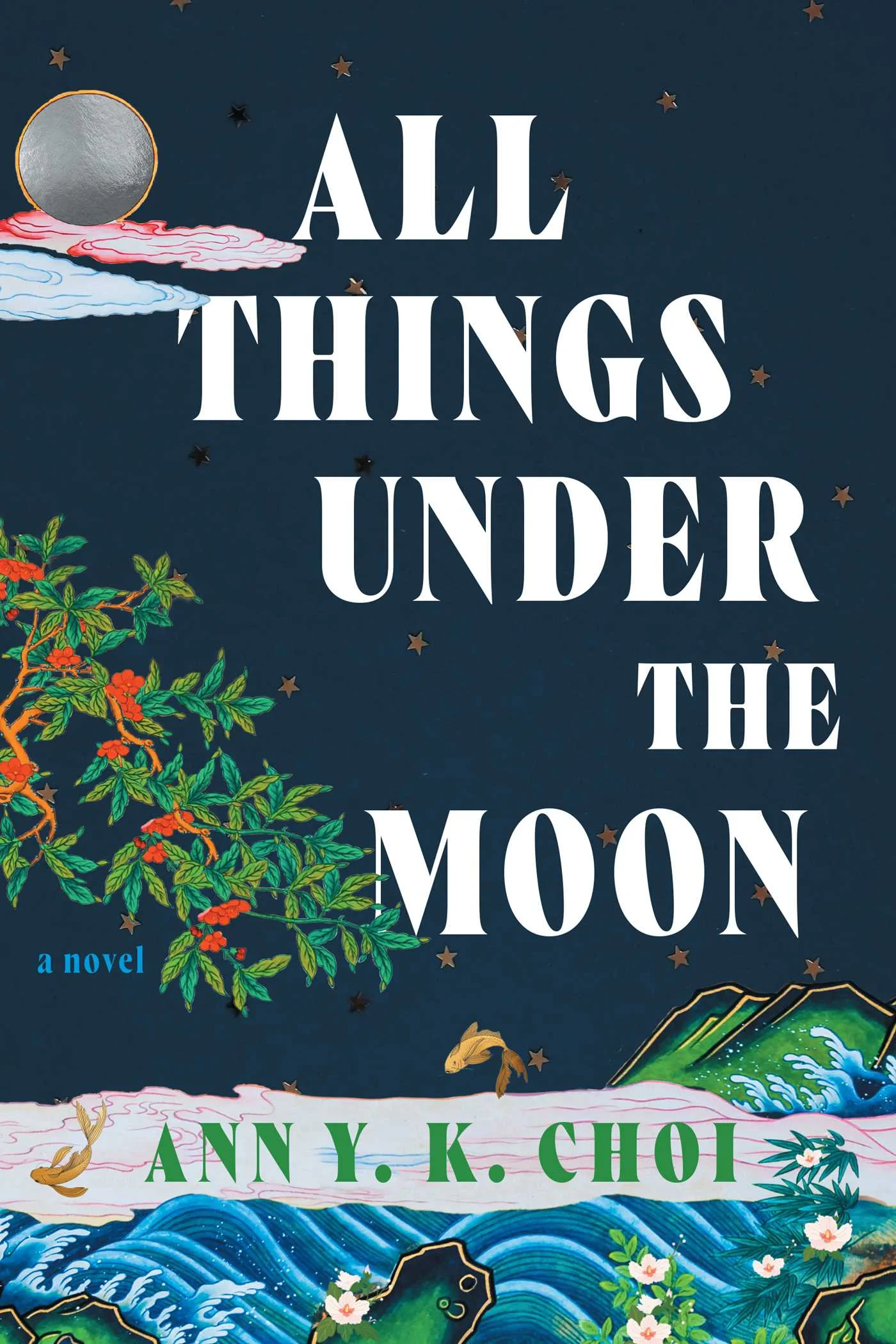
How did Korean women in the 1920s, a time when Korea was occupied by Japan, manage to pursue education and freedom in a traditional patriarchal society? Inspired by the life of the author’s grandmother, All Things Under the Moon (Simon & Schuster, 2025) by Ann Y. K. Choi portrays the journey of two young women struggling against a society that restricts women’s access to education and other fundamental rights.
***
The story follows Kim Na-Young and her widowed friend, Yeon-Soo, who live with their families in the rural village of Daegeori. When Na-Young’s father arranges her marriage to a man she has never met before, she and her best friend decide to flee the village. During their escape, Na-Young and Yeon-Soo encounter Japanese military policemen and are forced to separate, leading Na-Young to return home alone. She must then accept reality — and follow her destiny — to begin a new life in the city as a wife and an adult woman with responsibilities. Meanwhile, Yeon-Soo chooses the dangerous path of escaping her old life in search of freedom, leaving Na-Young behind.
Na-Young has always had a strong personality; she refuses to accept limitations imposed on her by her family, and demonstrates a confidence to face wrongdoing and say no to her family’s expectations.
During a conversation with Yeon-Soo, Na-Young asks: “Do you suppose laundry was ever men’s work? [...] Do you ever wonder what life would be like if you were a man?” (p. 6)
Despite her young age, Na-Young is highly aware of the inequality between men and women. She often had late-night discussions with Yeon-Soo, chatting about their roles as women in society, the limitations they face, and the way they are being treated differently to men.
“Girls can’t even go to school and learn properly like the boys. The world is unfair to women.” (p. 6)
The values and beliefs of her family have always been major obstacles to Na-Young’s dreams. When she was younger, she often daydreamed about going to school someday, learning how to write and studying literature, physics, and geography: “All Na-Young wanted was to learn to read and write, but her mother always told her that no man wanted a wife who was smarter than he was” (p. 6).
However, her father’s announcement of the marriage to Min-Ho is a final-non-negotiable decision. This reflects the harsh reality many Korean girls in the early 20th century faced, where marriage and obedience to their husbands often shaped their futures. Na-Young has no education and no future to look forward to. Yet deep inside, she longs for change and for any chance that might help her build the life she has long sought. She searches for independence and a life where she can rely on herself, not on a man.
“Did a woman always need a man in order to live her life?” (p. 30)
Living in the town of Anyang with her newly-wed husband, Na-Young starts her education with the help of her father-in-law, who teaches her Korean, Japanese, Chinese, and even English. Her life is filled with knowledge and curiosity rather than cooking and housekeeping, and Anyang soon becomes the place where she can finally pursue the life of an educated young woman eager to explore politics, religion, and literature. Although she leads an unhappy marriage, Na-Young embraces the opportunity to read and write for the first time, realizing that the rural life in Daegeori has prevented her from discovering the world and all its possibilities. At this point, Na-Young is fully aware that pursuing an education can help her save herself and find true freedom from the oppression she faces:
“We are twice oppressed. Once by the men in our country and then by the Japanese. The struggles and the barriers we face are much more challenging.” (p. 109)
In the novel, Choi doesn’t just portray Na-Young’s personal journey in Korea, but also a universal and relevant journey of self-discovery, moral ambiguity, courage, and sacrifice. She created a story of a heroine, emancipating herself, who takes the courage to be educated and find freedom on her own. Na-Young refuses to be victimized by her father; she rebels and shapes her life through education and knowledge, even in a period in Korean history coloured by oppression.

Whoever examines Kim Na-Young will find her to be an intriguing and evolving character, stepping into a challenging yet fulfilling life. Her journey of becoming is a testament to the transformative power of literacy, as she escapes the mundane rural life of the small village of Daegeori to finally find liberty in the town of Anyang, where women have enough knowledge and education to speak out. For Na-Young, learning to write and read opens the door to expressing herself and breaking free from the oppression of the patriarchal system she had been trying so desperately to survive.
All Things Under the Moon is a captivating novel about a woman who faces life’s twisting moments and difficult challenges without ever losing hope.
Comments on "Korean Women and the Pursuit of Education and Freedom — A Review of “All Things Under the Moon” by Ann Y. K. Choi"
Please log in to submit a comment.
Login