
Published March 30th, 2026
Review
A Personal Record of Anxiety and Growth — A Review of “In a Dream” by Lind Duraku
by Andrea Färber
Lind Duraku is a writer from Kosovo, whose debut collection In a Dream (Sekhmet Institute, 2025) features an array of poems, short texts and diary entries. Gathered over the course of a decade, the book captures both mundane moments in life as well as personal struggles with mental health and the notion of reconciling with the traumatic past of the place that is home.
With only 52 pages and texts that often fill less than three quarters of said pages, In a Dream is a relatively short read. Thereby, Duraku successfully showcases how to leave an impact without much embellishment, fast and to the point. The book is divided into ten short chapters that each feature a number of texts of different genres, sometimes with titles and sometimes without. The titles of the chapters, such as “Sunlight,” “Untold” or “Madness,” prepare the reader for the direction the next couple of texts are going to take. The shortness of them almost makes it feel like a fleeting thought that is there for a moment but then quickly gone again the next.
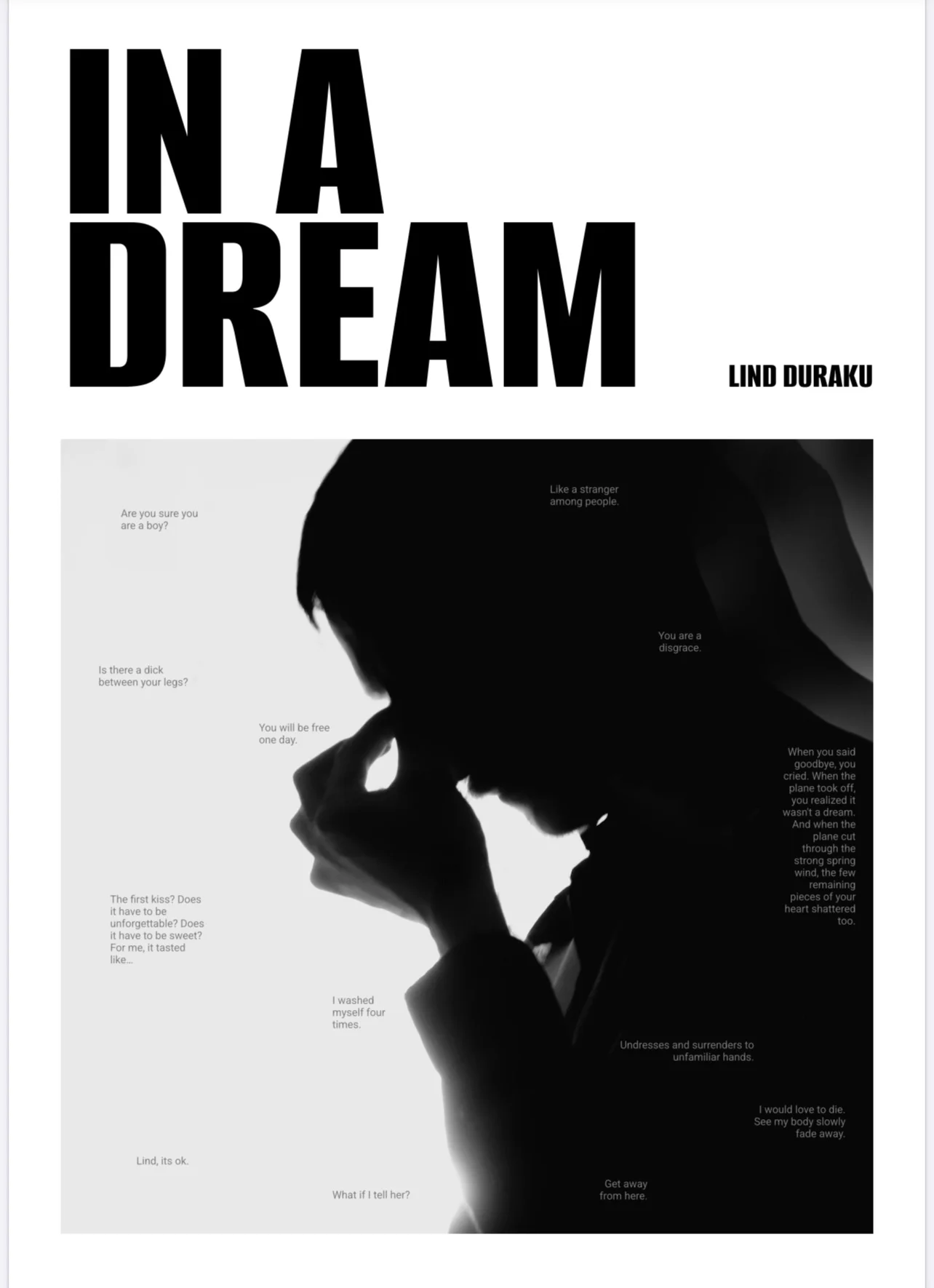
Mental health is the central theme of most of the texts. In the author’s note, Duraku states that “I was grappling with derealization and panic disorder, a struggle that continues but is now less hurtful. Writing became my lifeline during those days. [...] While this book captures moments of joy, romance, and occasional glimmers of hope and freedom, its heart lies in the battle with mental health struggles” (p. 1). Especially the diary entries, dated between 2015 and 2024, focus primarily on this topic. They are glimpses into Duraku’s mind, not in chronological order. Paying attention to the date, however, reveals the author’s mental health improving with time.
Many of the poems and short texts give a poignant insight into a life with panic disorder. “At the Café near the Clinic” is a poem that follows the narrator on the way to a clinic in distress, receiving anti-anxiety medication after “The machine that measures heartbeats nearly exploded” (line 8, p. 49). In the last stanza, he stays at a café near the clinic, too afraid to return to the apartment “In case something happens” (line 13, p. 49). A diary entry from 2024 details spending a night with a friend and the panic that overwhelms Duraku when he can’t fall asleep: “Nothing, just nothing, is going to happen. You’re alert. Your reflexes are fine. Your heart is beating fine.” (p. 48) After the date and place of the diary entry an addendum: “The morning after: Told ya. Too young to die.” (p. 48)
Perhaps most compelling is the way in which Duraku’s texts connect the most mundane things in life with memories and emotions in a way that feels very relatable. In one untitled text, the narrator daydreams of a relationship with someone that he only knows online: “The thing is, you never come real. Digital conversations and a dozen daydreams” (p. 39). In “Echoes of You in My Spotify Wrapped,” the narrator is haunted by his past relationship as he takes a look at his Spotify Wrapped. Songs that he associated with certain points in the relationship have made it on the list whereas the person associated with them is no longer in his life. In “I Taste Gazoza in Your Mouth,” he links the memory of a person with Gazoza, a nonalcoholic carbonated beverage: “I swore I would never write about guys again, but today I saw a cheap Gazoza in the market’s fridge” (p. 6). We only catch glimpses of relationships within these texts, but the way they are written reveal much about them on an emotional level.

A standout piece of the collection is “Krushë — Collective Grief.” Krushë e Madhe is Duraku’s place of birth. On March 25, 1999 during the Kosovo War, a massacre took place that killed more than 200 boys and men in Krushë e Madhe and the neighboring Krushë e Vogël. The text is about Duraku as a boy in second grade, partaking in a memorial held at his school in which he recites a poem and how the tragedy has shaped him in that moment and growing up: “I wasn’t just a child anymore — I became part of a great wound, one that hurts, hurts like a sharp razor” (p. 9).
Ultimately, In a Dream is a collection that is short in length but lingers long afterwards in the mind of the reader. Through fragments of memory, moments of vulnerability, and reflections on both personal and collective trauma, the texts build a quiet but persistent emotional resonance. The simplicity of the language allows the weight of the experiences to speak for themselves. Confronting the past while learning to live with the present, Duraku’s debut collection feels intimate and honest.
Disclaimer: The author has received a free review copy. The views and opinions of this review reflect their honest assessment of the book.
Comments on "A Personal Record of Anxiety and Growth — A Review of “In a Dream” by Lind Duraku"
Please log in to submit a comment.
Login