
Published October 26th, 2026
Interview
The Journeys of a Multi-Linguistic Migrant — An Interview with Sadiqa de Meijer
by Anushree Nande
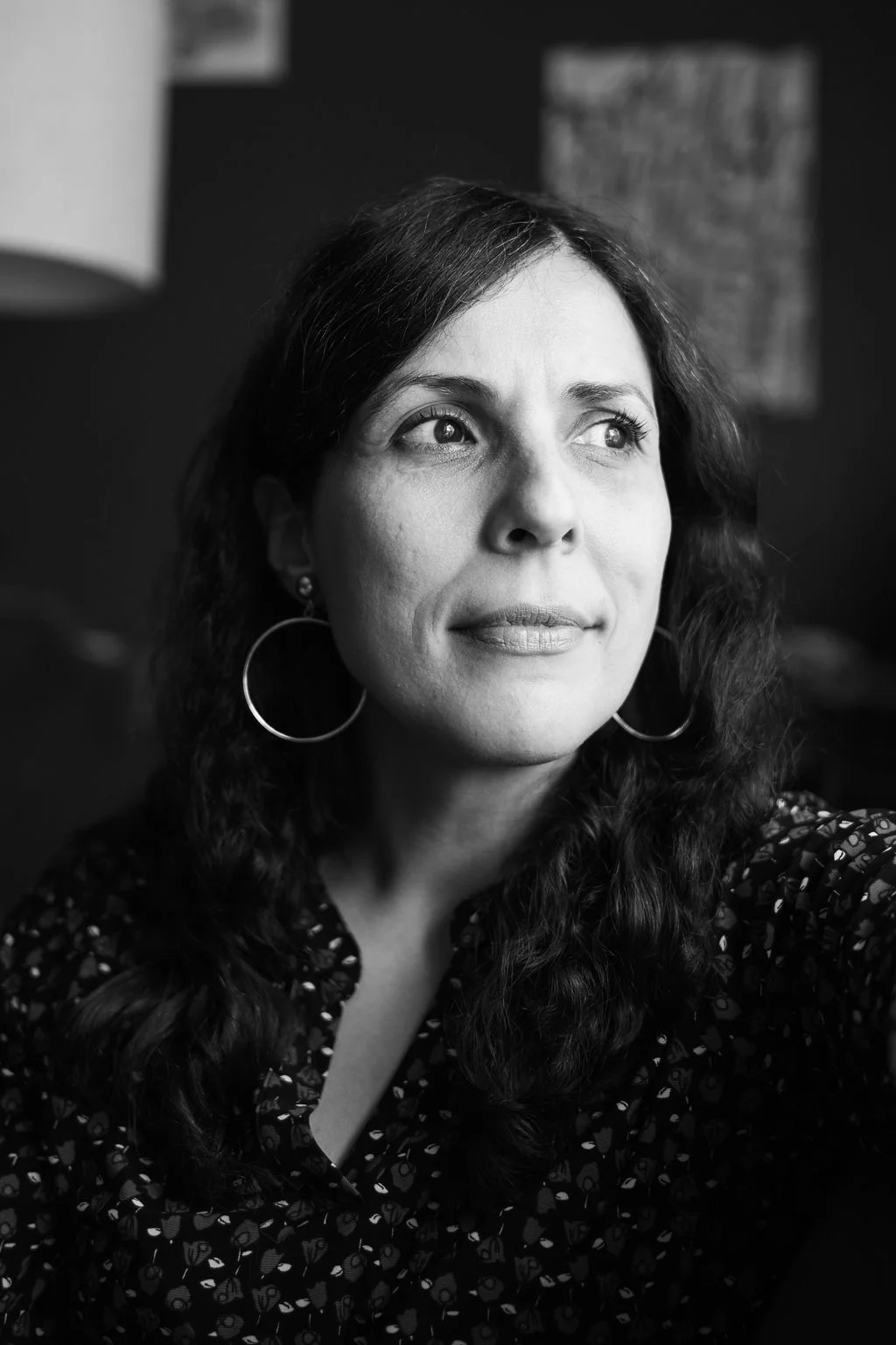
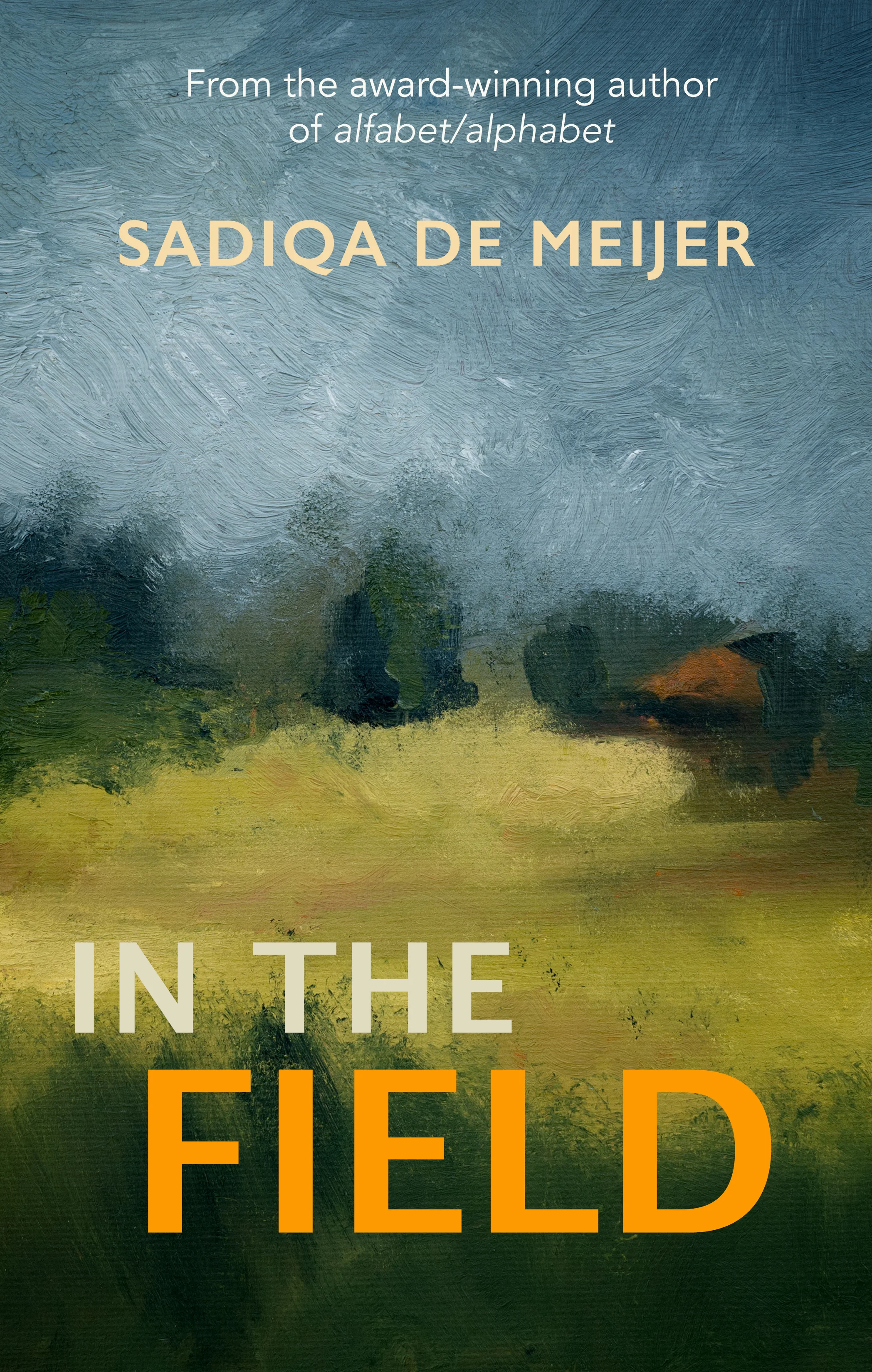
I was introduced to Sadiqa de Meijer’s work by the Tint Journal editors, who asked me whether I’d be interested in interviewing her. Even at a glance (of the attached synopses), I knew my answer would be yes. It has been such a pleasure reading through both alfabet/alphabet (Palimpsest Press, October 2020), a fascinating language memoir interrogating what it means to be a multilingual migrant and how we derive meaning when understanding and communication take place through such a diverse and complex lens, and In The Field (Palimpsest Press, October 2025), which carries forward meditations on identity, home, belonging, mother tongues and heart tongues, and how language shapes, unmakes, and rebuilds us
***
Sadiqa’s latest essay collection deals with fieldwork — both the going out, observing, and collecting, and the concurrent journey inward. Through these two powerful opposing impulses in conjunction with each other, and a more defined framework through which to explore the questions raised in the previous collection, we are treated to an even richer and more complex reading experience. One that celebrates subjectivity and diversity, and prods us, ever so gently, to ponder these questions within the context of our own lives and the perspective through which we view the world and its people.
We chatted via email and this is an edited version of our conversation.
Anushree Nande: You describe a translator ferrying a poem across the difference between languages and meaning. Do you feel the same way when transitioning between the languages that are so much a part of you?
Sadiqa de Meijer: I love ferries, their mythology and their reality, and so this likening is a form of praise for the art of translation. And I’m not the first to make it—Paul Celan, for one, called translation fergendienst, which means something like ferryman’s labour. The nature of that work and speaking interlingually is different—literary translation takes patience, deliberation, a deep alertness to the text; there’s a sense of steady effort. But moving between known languages in conversation, even without fluency, can be playful, pleasurable, expansive, as if for a moment you’re inhabiting more of your mind at once. Maybe it resembles lucid dreaming? You are using language while aware that you are using it—this is how I feel when I speak to Dutch friends or family now, and we move freely between languages according to how the subject or the emotional tenor shifts, helping each other find the right words, acknowledging when the possibilities have different implications.
Anushree: Following on from that, how are we, according to you, to reconcile with the untranslatable? There is, as you write, no explicatory process by which we become fully known to each other.
Sadiqa: Yes—the great mistake is to project our fears into that unknown; some people make this mistake the basis of their politics, which has all kinds of terrible consequences. I am speaking now of language, but also of the culturally unknown. Less disastrously, though still to our detriment, there is a sort of flattening out that happens when we imagine every word and gesture to be interpretable. Because my own background is mixed—Dutch, Kenyan, and Pakistani, and living in Canada—I’m well versed in watching people make a (partly internal) effort to translate me, so to speak, into the familiar. But on what grounds do some unknowns require parsing? I believe that to reconcile with the untranslatable means to appreciate that it exists for sound reasons, to accept that it comes with potential discomfort, and to be grateful that the world is wider than our minds.
Anushree: What was the genesis of In The Field? What were the creative impulses that fuelled it? How did you decide on themes and the individual essays that make it up? Were they all written around the same time? Please feel free to also share anything else you’d like to divulge about your writing process and approach in general.
Sadiqa: What I’m pursuing in In The Field is the inherent value of our subjective experience—the particulars of how each of us encounters the world. So while the essays are constructed of my lived material, I intend them as the means for the reader to consider their own knowledge and doubt, their love, their ethics, their meanings. Often the impetus for writing was a persistent inner question that I couldn’t answer—for example, how is it that I feel at home in my birthplace when I don’t remember living there, or what makes me uncomfortable with surveilling people while they look at art? The subsequent process, which I’ve described elsewhere as observing-thinking-feeling-intuiting-associating-researching—I consider all those methods valid in working towards a result on the page. I started the first essay, “Found”, about twelve years before the book came out, but most of the pieces were written in the last five years.
Anushree: Having been primarily a poet before publishing your two essay collections, how has this transition felt for you? What has the experience been like? Have there been moments where being a poet has helped or hindered you? And, I should have asked this first, why essays?
Sadiqa: I love the essay form—its fidelity to a subject, its range of registers (personal, journalistic, philosophical, lyrical, etc.), its sense of being the literary equivalent of taking a sketchbook and drawing from life and then sequencing the scenes until you understand something anew. So the essay’s appeal for me is broad. Compared to poetry, I find the through-line to be one of inquiry—in an essay I am trying to figure something out, whereas in poetry the path is associative and unpredictable. I do think writing poems is instructive: you learn to listen to your phrasing, to find the rhythms and sustain them, and good prose requires the same. You practice, also, the removal of any superfluous words—a skill transferable to sentences. And poetry gives you a facility with imagery and with the figurative. Perhaps it should be acknowledged, though, that lyricism in essays is like the chopped dates and nuts on my oatmeal; it would not be delicious without them, but I do want the porridge too.
Anushree: In Alfabet/Alphabet, you wonder whether it is possible to write in a language that doesn’t channel your earlier selves. You go on to say that the answer to that question, for you, evolves as you work. Where would you say you find yourself on that journey at this moment in time?
Sadiqa: In the six years since that book came out, I’ve sensed the continued, subtle widening of the temporal space between myself and my first language, and that shift makes me feel slightly foreign to myself. I have also been moved by readers telling me of their own linguistic inheritances, losses, and recoveries. So I take it even less for granted now that languages matter deeply to who we are. And as a writer I’ve become curious about the possibility of writing a Dutch book, of returning to the Netherlands for a few months and documenting that re-immersion into my first linguistic element—I wonder what could be channeled then.
Comments on "The Journeys of a Multi-Linguistic Migrant — An Interview with Sadiqa de Meijer"
Please log in to submit a comment.
Login