
Flash Fiction
The Party
by Elodie A. Roy
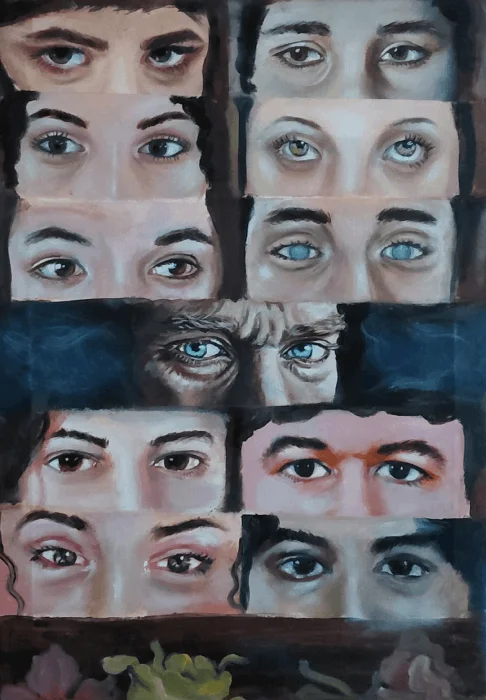
Every year before Christmas, Bill has a party. He invites the lonely hearts, the widowers and the dreamers of Moston. The haunted people he meets at church, at the community choir, or when he volunteers at the Salvation Army. The list of guests grows longer every year. He calls the occasion “opening his house to old and new friends.” When the invitations come, the chosen ones sigh. They resist like sullen children. They pretend they won’t go. Yet everyone diligently turns up at Bill’s door on the appointed night, as if summoned by a higher call. When Bill first invited me three years ago, I was hungry. It was the winter I lost my job at the supermarket for stealing a chicken. My daughters had to eat. Bill fed us. Later he helped me find a job at the animal shelter. I have come to regard Bill as saintly — although his means are modest, he gives unreservedly. The day before the party, he prepares extravagant quantities of food. He spends hours concocting his special, sickeningly sweet non-alcoholic mulled wine (for Bill never drinks). He weaves thick wreaths of evergreens. When I arrive, the house is crammed. The first-time guests lean against the kitchen counter laughing, giddy with sugar. Frail old ladies doze off in the corduroy armchairs. There is a deck of cards lying on the coffee table, a queen of hearts at the top, and crumpled paper hats on the floor. Candles are burning. The atmosphere is one of happy lassitude — people feel comfortable at Bill’s, no longer crippled by their inadequacies. It is because everyone seems so uninhibited that I notice the woman in black. She doesn’t belong. She is hovering by the buffet, piling food on her dinner plate, thin and serious as a tin soldier, her face expressionless. I notice her pale, unstockinged legs — shocking in their whiteness. When she’s finished, she begins filling her plate again. I can overhear the bus driver — a tiny man with quick, nervous eyes — speaking to another guest. The topic of their conversation is ghosts. Ghosts always appear on the edge of our perception, the man claims. To see them we need to train our peripheral vision. Most people can’t do it. I’m still observing the woman in black, gravely munching away. I am surprised when she approaches me. I’ve not been to a party in years, she says in a thick Russian accent. When was the last party you went to? I ask. She replies automatically. St Petersburg, 1992. Wonderful music. We drank and danced all night. We recited poems. I remember: Akhmatova, Tsvetaeva. Sad poems, yet I was so happy then. It was the night before I left Russia. I never danced once in Manchester, not even at my wedding. Even now she sounds vexed. I tell her Manchester was known all over the world for its parties then. Is that so? She shrugs. I liked the Russian parties better, she says. More life. Now, if you’ll excuse me, I need to be outside. And without a further word she walks to the front door, a quiet resolution in her stride. For a few seconds I still see her bare, curiously pale legs — picturing them pacing the Nevsky Prospect, kicking pebbles, waiting outside empty shops — and no amount of food will fatten them, for she was born like this, on the margins of history, unassimilable, underfed, but still strong enough to escape — or refuse — the charity of strangers. She seems to grasp intuitively what took me years to comprehend: Bill isn’t feeding us, we are feeding him.
Appeared in Issue Fall '26
Comments on "The Party"
Please log in to submit a comment.
Login